Getting around Bali: four travellers on scooters, Grab and a driver
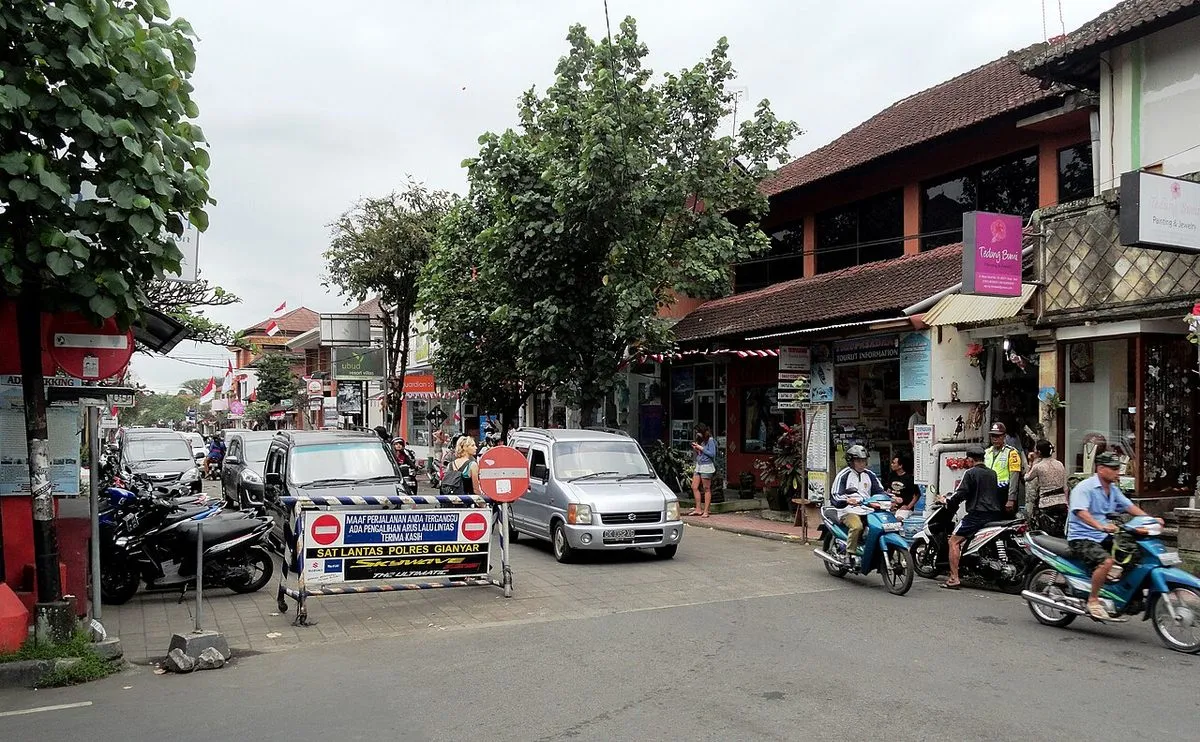
Brad Conlon had been walking everywhere in Bali and was tired of it. Everyone around him was on a scooter, so he went to a rental stall, asked what the “CC” on the sign meant, and rode away on a 155 cc bike. He asked about insurance for damage first. “We don’t have insurance here,” the man told him.
That same evening he put a hole in the side of a shop.
His video is one of four this article retells. Together they cover the ways most visitors get around Bali: renting a scooter, riding on the back of someone else’s through an app, taking a taxi, hiring a driver for the day and catching a boat. Everything below comes from the travellers’ own videos, and each claim links to the moment it is made.
What they paid and where it worked
| Way of getting around | What the travellers report |
|---|---|
| Scooter rental | 80,000–150,000 rupiah a day, or about $100 a week for “a good scooter” |
| Grab or Gojek | 40,000–50,000 rupiah for a ride a taxi priced at 200,000; no service in small towns or on the islands |
| Street taxi | 200,000 rupiah quoted for that same ride |
| Private driver for a day | $69 per person for an eight-to-ten-hour tour booked online |
| Fast boat to Nusa Lembongan | 30 minutes; no fare stated |
At today’s exchange rate 100,000 rupiah is about $5.50.
Brad: day one, a passenger and a wall
Brad had done some reading and decided the stall was not overcharging him: about $100 a week for a decent bike. The whole lesson he got was where the accelerator was, and two words from the owner: don’t panic.
He thought he could ride. A friend from his guest house had just handed back his own scooter on his last day, so Brad offered him a lift to the beach to watch the sunset. With a passenger the bike felt different straight away. “I already can’t even balance myself,” he says, and calls what came next the stupidest thing he has ever done.
At the end of the street he looked both ways and pulled out. The weight shifted, he overcorrected, and instead of braking he twisted the throttle. “I went straight into a wall and I put a big hole in the side of a shop.”
He does not say what the damage cost him or whether anyone was hurt. The video moves on. What is left is the order of events: no insurance at the stall, no practice, a passenger on the first ride.
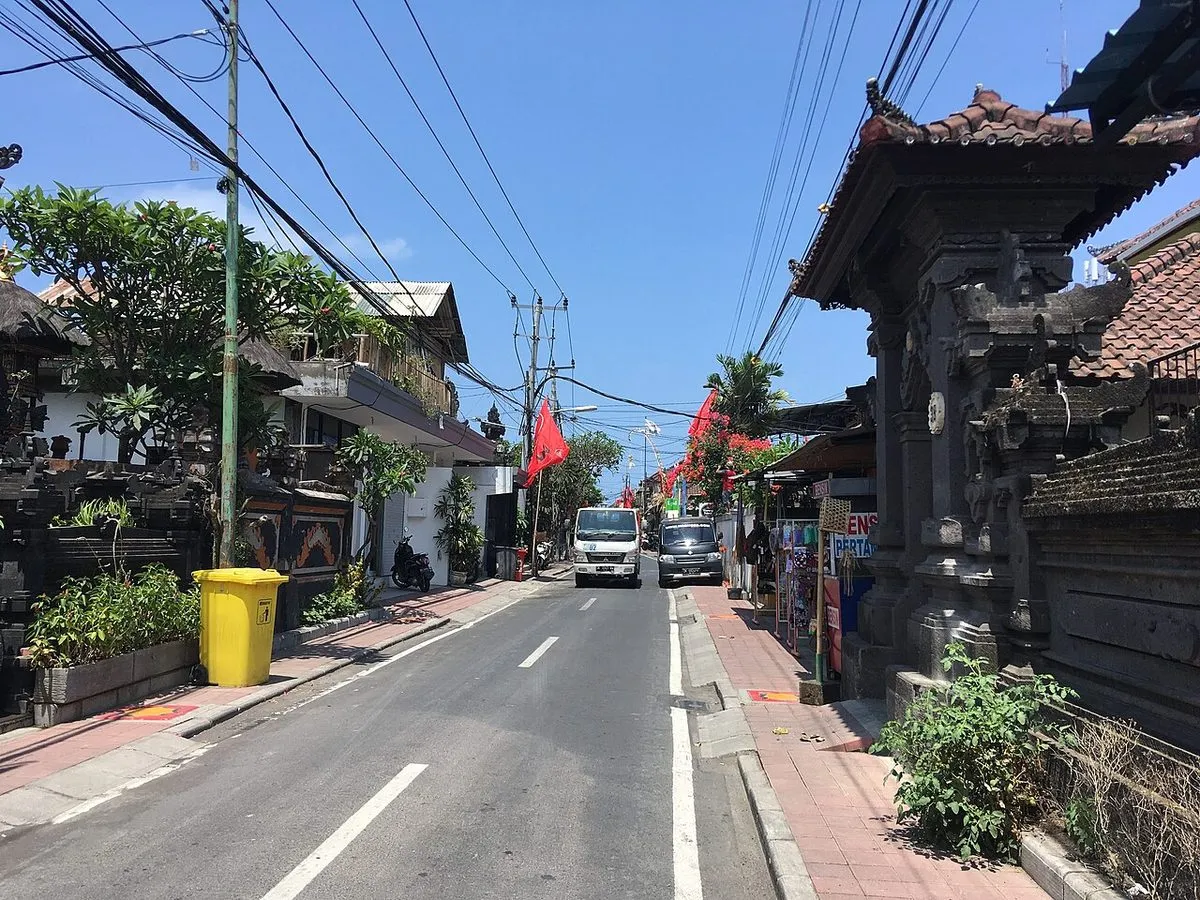
Photo: Christophe95, CC BY-SA 4.0, via Wikimedia Commons.
The wanderlost couple: apps where they work, a scooter where they don’t
The couple behind wanderlost travelled all over the island and used nearly everything. Their rule for choosing is honest about fear. One of them rides a scooter happily in some places and not in others, and Ubud, which they call the worst traffic on the island, is one of the others: “I’d rather just be on the back of a Grab.”
Grab and Gojek work like Uber, with one difference that matters in Bali: you can order a motorbike with a driver instead of a car. In traffic the couple would book two bikes and weave through it separately. Their advice is to install both apps before you fly, because signing up can need a text message to your home number, and to compare prices between the two.
On taxis they are blunt. “Don’t do it,” one of them says about jumping into the first cab out of laziness. They remember a driver quoting 200,000 rupiah for a ride that Grab priced at 40,000 to 50,000. They also explain why you sometimes have no choice: in some areas local taxi drivers do not allow app drivers in, and can charge more because of it.
The apps have limits of their own. In Munduk, in Sidemen and on the smaller islands the couple found no Grab at all. That is where they rented scooters, for 80,000 to 150,000 rupiah a day, and it became their favourite way to travel. A scooter got them down to beaches a car could not reach, and it was cooler than anything with a roof: “it always feels like an adventure every time you get on one.”
They never hired a private driver and say so. They mention it as the option for people who want to see many sights in a day without riding, and admit they do not know what it costs. The next traveller does.
The boat to Nusa Lembongan
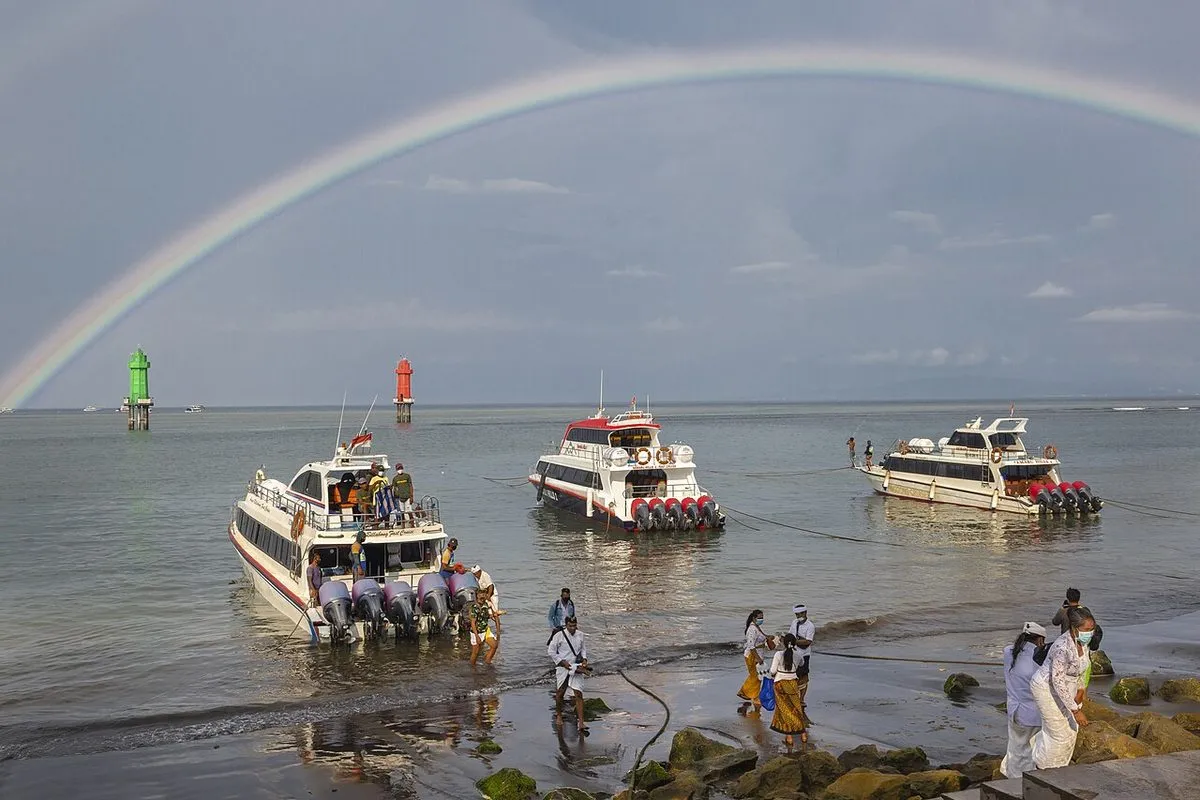
Photo: Imadedana, CC BY-SA 4.0, via Wikimedia Commons.
The couple filmed part of the video on Nusa Lembongan, an island they reached by a 30-minute fast boat. The harbour surprised them. It works more like an airport than a pier: an office, a sticker, a barcode scanned three times. Many boats leave at almost the same moment, so they recommend buying the ticket in advance and arriving early. They nearly missed theirs in traffic.
On board it was crowded and hot. Their packing list for the crossing is short: a fan and a cold Coke. There are no porters, so pack light. They chose a morning boat because the sea is calmer then.
Gracie: one day, one driver, $69 each
Gracie O’Connor was in Bali with her mother, on a three-week trip through Asia, with one free day left on the island and a list of things around Ubud they had not seen. She booked a private driver through a tour site: $69 per person, eight to ten hours, a fixed list of stops. She was suspicious of the price. “It sounds a little too good to be true,” she says before the car arrives.
The driver, Surya, took them first to the Tegallalang rice terraces, where her mother went on the jungle swing before she did. Then came a coffee plantation they had not expected to tour, and a cup of luwak coffee for an extra 50,000 rupiah. After that, the Monkey Forest, and lunch at a restaurant the tour had chosen for them.
Not every stop worked. The waterfall meant more than 160 steep steps down, and they watched someone fall on the way back up. “These steps are no joke.” At the bottom it was crowded, and they decided not to swim after all: “it does not look very fun. I’m going to be honest.” They also asked Surya to drop three stops, two shops and a palace they had already visited, and he did.
Back at the hotel she gives her verdict. “Our answer is an overwhelming yes.” Her reasoning is about what the day would have taken otherwise: a separate ride for every leg, entry fees to sort out, and nobody to explain what they were looking at. Her one complaint is the lunch stop she did not choose, which felt touristy.
Her video is from October 2023, so the price may have changed since.
Ben: the man who swore he would never ride
Ben Woodward films his travels from a scooter, which is not how he expected things to go. “I was never ever ever going to be riding a scooter in Bali, in Thailand, in Southeast Asia,” he says at the start. His reason was what he had seen in airports: people hobbling into departure lounges with bandaged knees and elbows.
He changed his mind during a long house sit in Thailand, far from the nearest town, when the owners offered him their scooter. He learned on the empty roads inside a housing estate, moved to the main road after a couple of days, and only then let his wife ride behind him. “I just felt an enormous responsibility for someone else’s life,” he says. It is the opposite of Brad’s first evening.
His video is a day’s ride around the western tip of Bali, and a list of rules he keeps. He boils them down to two words: reaction time.
- Speed. He stays around 50 km/h, because the difference from 60 is time to react.
- Rain. When it starts, he pulls over and waits with a coffee. He does exactly that early in the video.
- Night. He avoids riding any distance after dark.
- Brakes. Before paying for a rental, take it for a test ride: “the one thing you have to be absolutely sure about is the brakes.”
- Alcohol. He does not drink and ride, and will not carry a passenger who has been drinking either.
- Traffic. In busy towns he stops expecting other people to follow the rules he knows, and moves with the flow, like a school of fish.
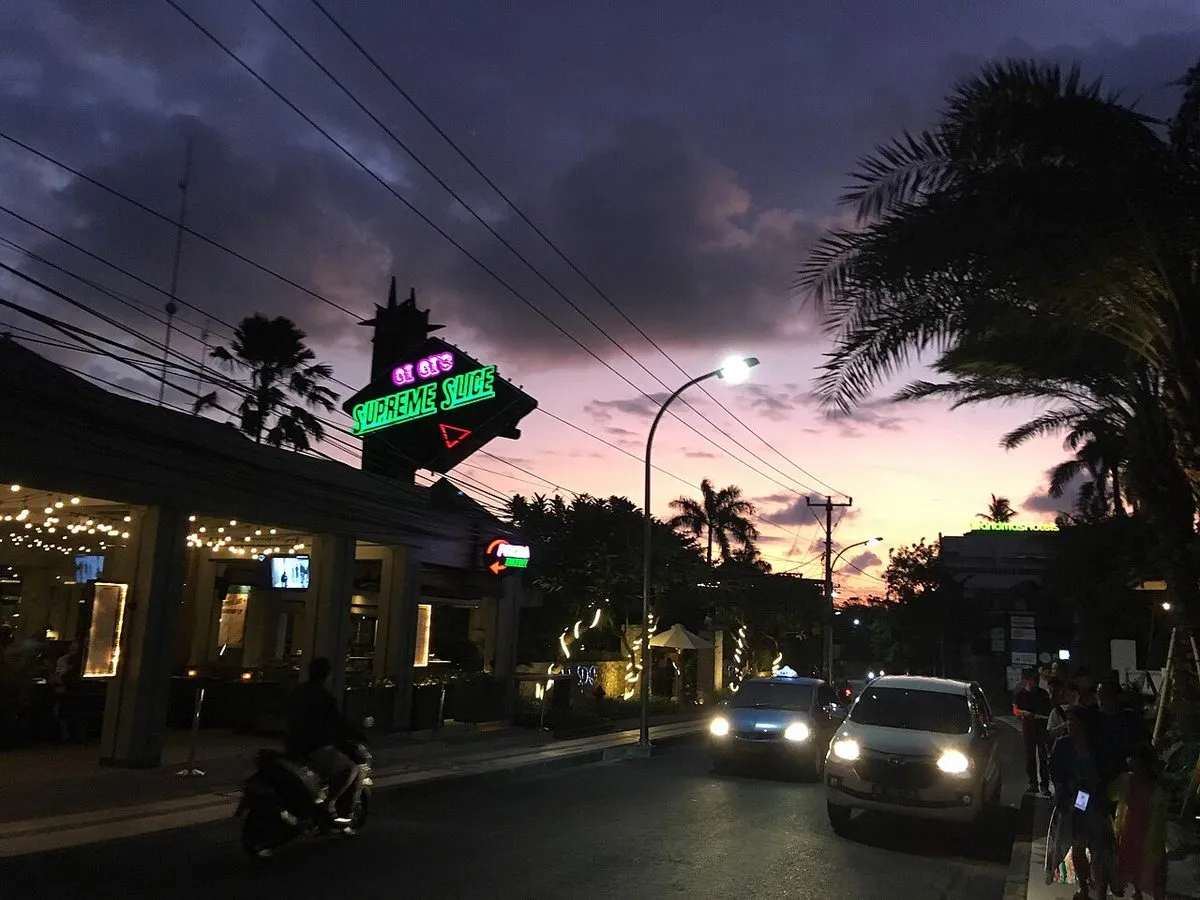
Photo: Christophe95, CC BY-SA 4.0, via Wikimedia Commons.
The detail people remember from his video is not about crashing. In Amed he met a Frenchman who had ridden all day with bare hands. “The backs of his hands were entire bulbous blisters, like one giant blister on each hand.” Ben now rides in gloves, long sleeves, jeans and hiking boots, and has a line for anyone planning to wear sandals: “If you want to grate your feet like cheese, wear sandals, wear flip-flops.”
He still ends where the wanderlost couple do. “A scooter really can be your ticket to freedom.”
What the four stories add up to
The scooter is the cheapest and freest option, and the one that goes wrong. Three of the four travellers rode one. Two loved it. The one who skipped the learning hit a wall within hours.
Learn before you carry anyone. Ben practised for days before taking a passenger. Brad took one on his first ride.
Use the apps where they exist. On the one ride the couple compared, a taxi asked four to five times the Grab price. Install Grab and Gojek at home.
Have a plan for where the apps stop. Small towns and the islands had no Grab. There it is a scooter, a local taxi or your feet.
Ask about insurance and expect the answer to be no. Brad’s rental had none. None of the riders says what licence they hold or whether their travel insurance covers riding a scooter, so that is worth checking with your insurer before you go.
A driver costs more and removes the planning. For one packed day around Ubud, $69 a head bought every transfer and a guide. Check which stops are shops, and say which ones you want to skip.
Dress for the sun as well as the road. The only injury described in detail in these videos is a sunburn.
How this guide was made
Everything above was said by the travellers in their own videos. Quotes are taken from the videos’ automatic captions, or from our own transcription of the audio where captions were not available, and checked against them. Prices are in the currency each traveller used; the rupiah conversion uses the exchange rate of 15 November 2026. We did not travel for this article, and nobody featured here paid or was paid to appear. The photographs are not from the videos; they are freely licensed images from Wikimedia Commons, credited under each one.
Planning your own trip
Our flight pages show the cheapest months to fly on each route, from live prices. If you would rather not ride at all on arrival day, you can compare fixed-price airport transfers before you land.